

Join 8,000+ Iceland travel fans and unlock the reader discounts
Get Iceland advice straight from a local, once a week. Subscribe and unlock discount codes from 50+ hand-picked Icelandic companies.
- Instant access to the reader discount codes
- Savings on tours, hot springs, car and camper rentals
- Tips and ideas for planning your Iceland trip
Free, once a week. Unsubscribe any time.
★★★★★
“Jón answers quickly and tries to find a solution … I recommend Jón and his site Stuck in Iceland from all my heart!”
Christian D., reader review on Trustpilot, November 2026
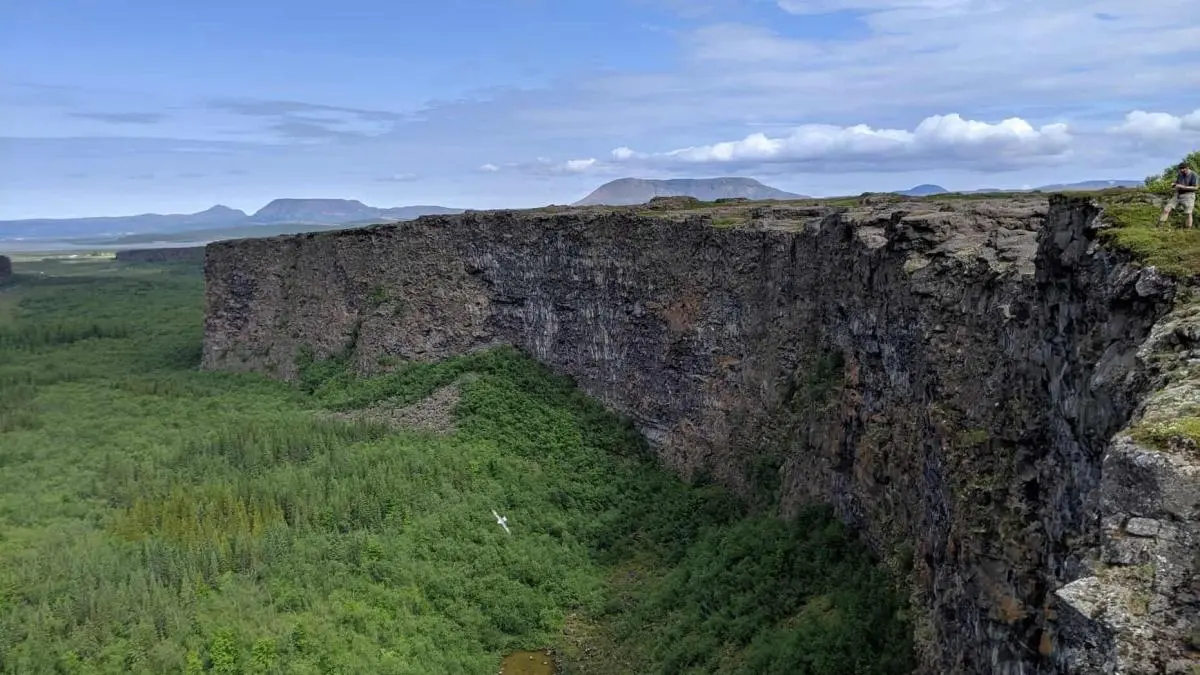
Imagine a place which is so strange the only explanation people had for its creation is to attribute it to the steed of Odin himself. The legend is that the chief of the gods was racing across the sky on his horse, Sleipnir, when he stepped down with one of his eight legs. His mighty hoof left a print which was the horseshoe-shaped Ásbyrgi.
Part of the Vatnajökull National Park
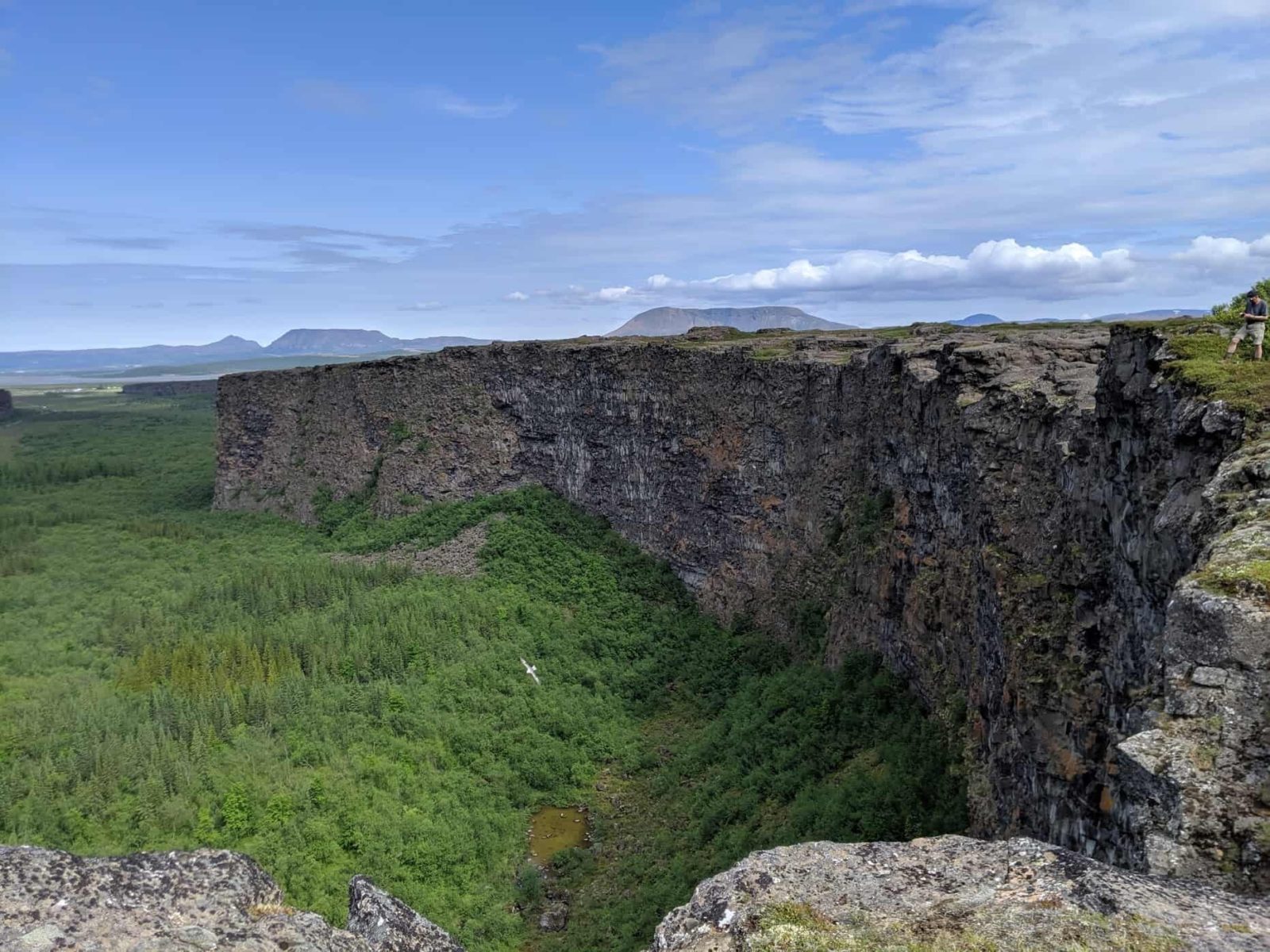
The Ásbyrgi depression is about 3.5 kilometers (2.2 miles) long and 1.1 kilometers (0.7 miles) wide. This is just as a fraction of the massive Vatnajökull National Park. The dominating feature of Ásbyrgi is the imposing 100-meter-high (33-feet-high) canyon walls.
Free road trip plans with maps
Day-by-day plans for the four drives most people take, each on an interactive map with where to sleep, fuel stops, waterfalls and reader discounts along the way. Built for a relaxed pace, not a race.
See all road trip plansMap of hot springs, spas and pools
Every lagoon, wild hot spring and town pool in Iceland on one map. Find warm water near you, and see which spas give my readers a discount.
- 57 places to soak
- % Reader discounts
Created by massive floods
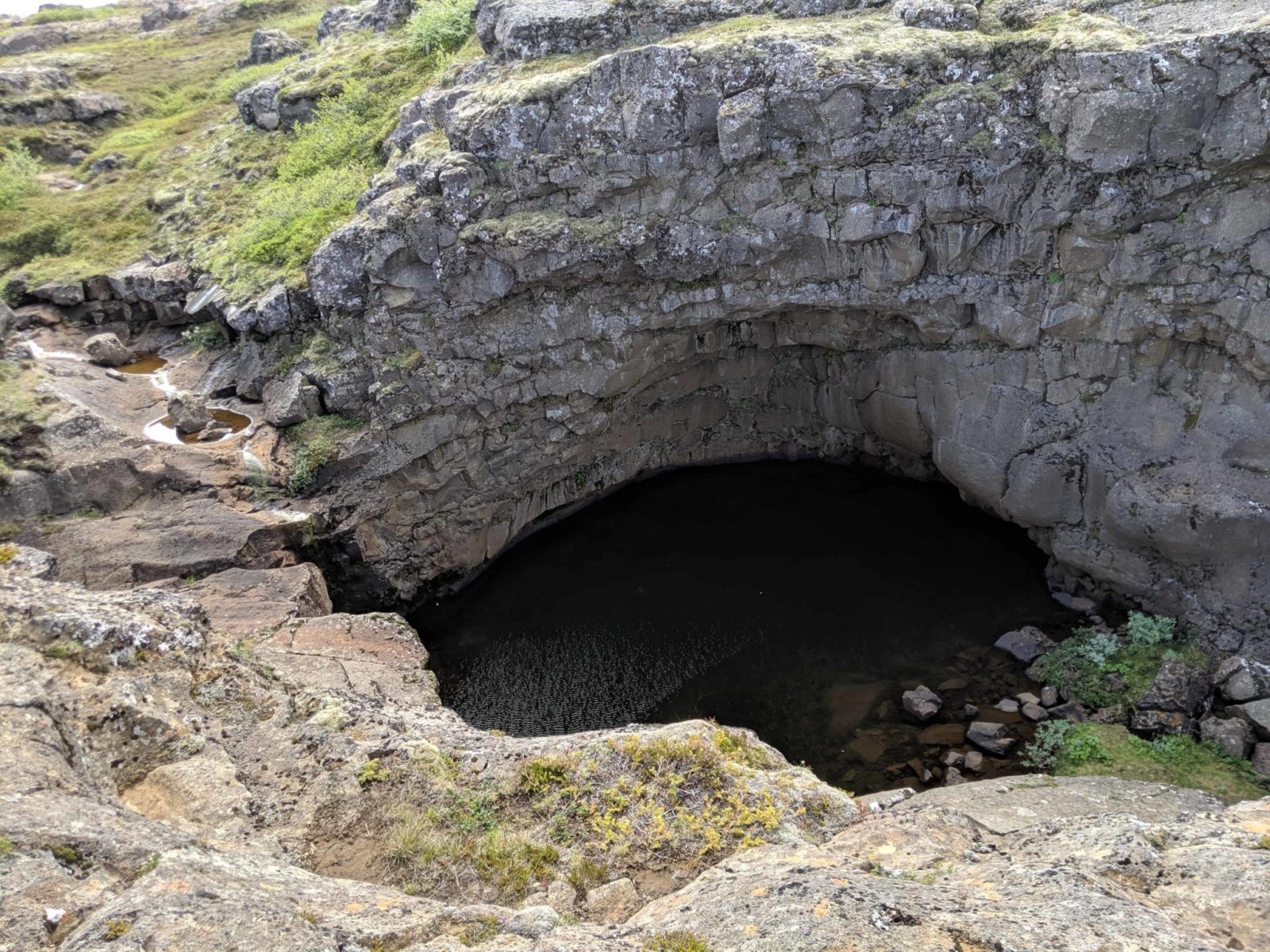
Ásbyrgi was indeed created in a series of dramatic events. Science maintains that a celestial horse had nothing to do with the creation of Ásbyrgi. Rather, it was a series of extreme floods in the nearby Jökulsá river, which rushed across the highlands after the last ice age. This was some 8-10 million years ago. Stand at the edge of the cliffs there, right above the nice little pond at Ásbygi’s bottom. You will see a massive pool or hole carved into the rock. Floodwater and boulders drilled down into the sheer rock. This is known in Icelandic as Skessuketill or a troll’s kettle. Quite appropriate, I think. Anyway, when the water cascaded downwards. Everything that wasn’t Ásbyrgi-shaped was washed away.
Echo rocks
Flooding also created the beautiful Echo Rocks or Hljóðaklettar basalt rock formations. Floodwater stripped all loose material away. Basalt rock formations created in past eruptions remained. I imagine that these places are a geologist’s dream.
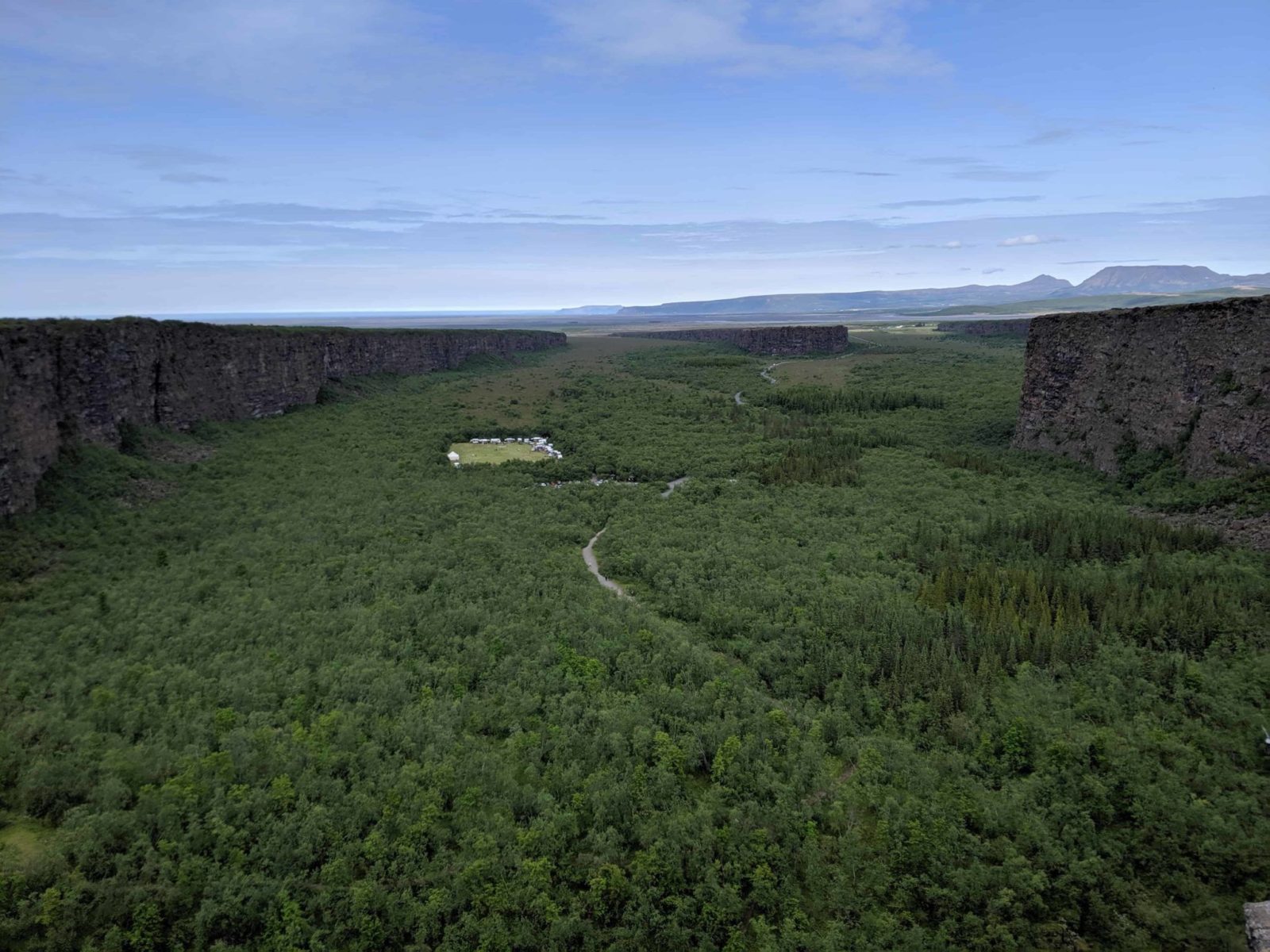
The wonderful woodland oasis
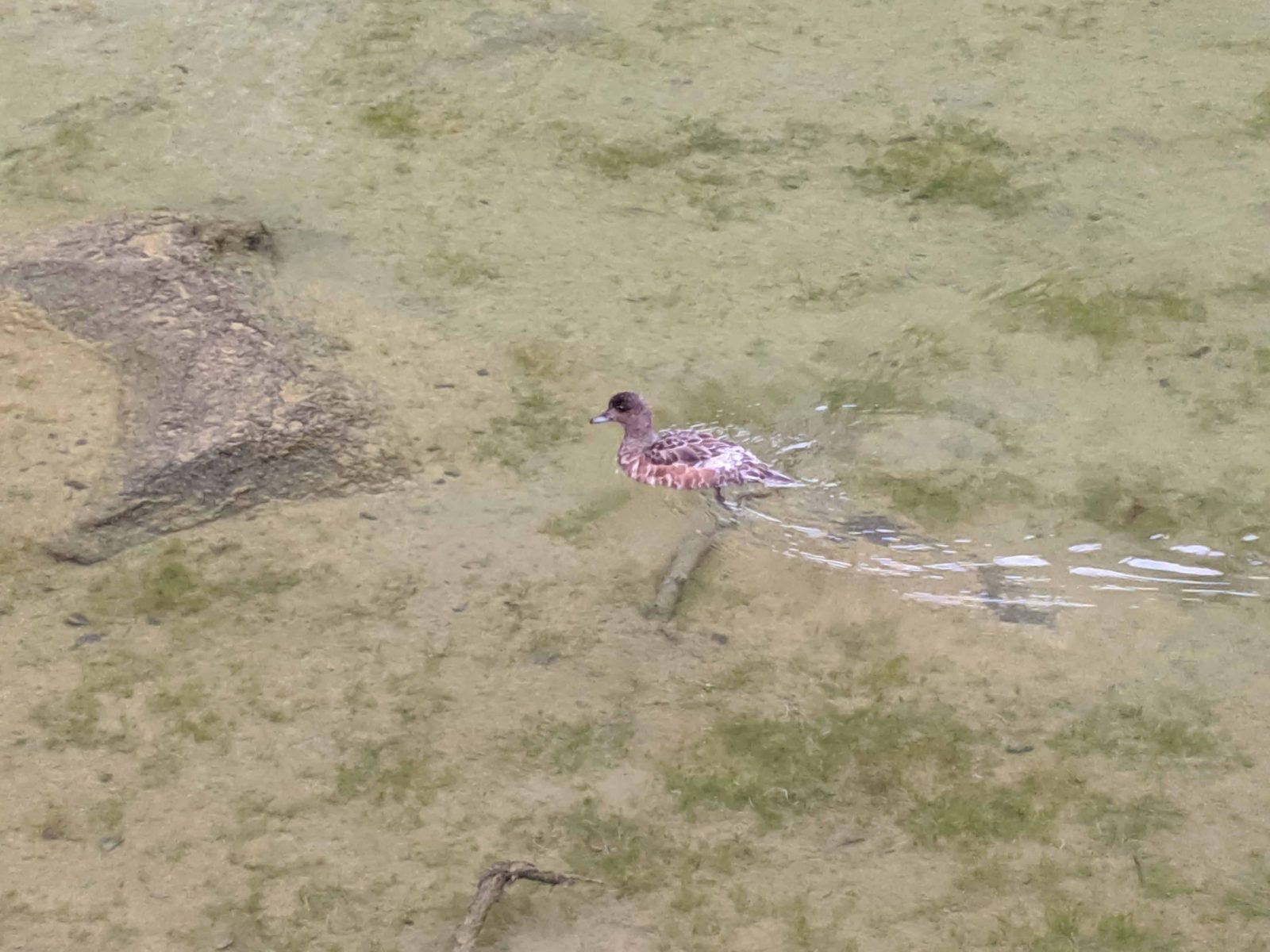
Today Ásbyrgi is a woodland oasis with a really nice camping ground. It is an essential stop on the beautiful Diamond Circle. It is such a nice area for walks. The little pond, Botnstjörn, beneath the over-100-meter-high (300-foot) cliffs that embrace Ásbyrgi is so lovely. Fulmars nest on the cliffs but ducks paddle on a calm pond. When I visited Ásbyrgi this summer, somebody had released a couple of arctic char in the pond. If you see them too, they are definitely not native to the pond.
Sigur-rós etched into memory
I have a great memory of Ásbyrgi. When Sigur-ros were traveling around Iceland and making their film ‘Heima’ they had a concert there. I will never forget walking down to the field where the concert took place. The ethereal music echoed across the cliffs on that lovely sunny evening.
Join 8,000+ Iceland travel fans and unlock the reader discounts
Get Iceland advice straight from a local, once a week. Subscribe and unlock discount codes from 50+ hand-picked Icelandic companies.
- Instant access to the reader discount codes
- Savings on tours, hot springs, car and camper rentals
- Tips and ideas for planning your Iceland trip
Free, once a week. Unsubscribe any time.
★★★★★
“Jón answers quickly and tries to find a solution … I recommend Jón and his site Stuck in Iceland from all my heart!”
Christian D., reader review on Trustpilot, November 2026
