

Articles about Icelandic Glaciers
Roughly a tenth of Iceland is covered by ice, and the glaciers are among the country’s most powerful sights. They’ve shaped the landscape over thousands of years — carving valleys, feeding waterfalls and glacial rivers, and leaving the black-sand plains behind them. Standing on one, or beside one, is a highlight of many trips. Vatnajökull is the giant. Europe’s largest glacier by volume, it sits beneath its own national park and sends outlet glaciers tumbling toward the coast. One of them feeds the famous Jökulsárlón glacier lagoon, where icebergs drift toward the sea and wash up on the black sand of nearby Diamond Beach. In the south,
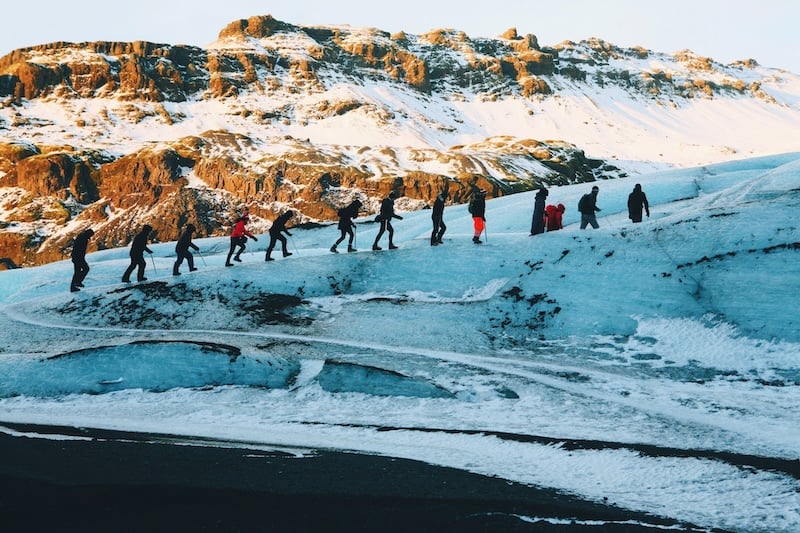
Sólheimajökull is the most accessible outlet glacier and a popular spot for guided hikes. Langjökull and Mýrdalsjökull are the other big icecaps most visitors will encounter. For experiencing Iceland’s glaciers, safety is the first rule. Glaciers are not flat, stable ground — they hide deep crevasses and shift constantly, so never walk onto one without a licensed guide and proper equipment. With a guide, though, the ice opens up: glacier hikes suit anyone reasonably fit with no experience needed, ice caving takes you inside chambers of blue ice in winter, and snowmobiling crosses the icecaps. Glacier hikes run year-round, while ice caves are a winter activity that shifts location each season.
One sobering note worth noting: Iceland’s glaciers are retreating, and visiting them is also a chance to see something genuinely changing. In this section, you’ll find my guides to Iceland’s glaciers: where to see them, which tours are worth it, when to go, and how to do it safely — the honest, practical advice I’d give a friend planning the same trip.
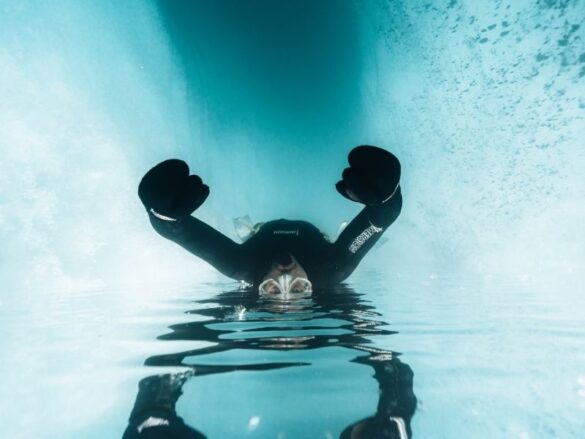
Eyrún Lydía’s Glacier Lake Dive: A First for Iceland
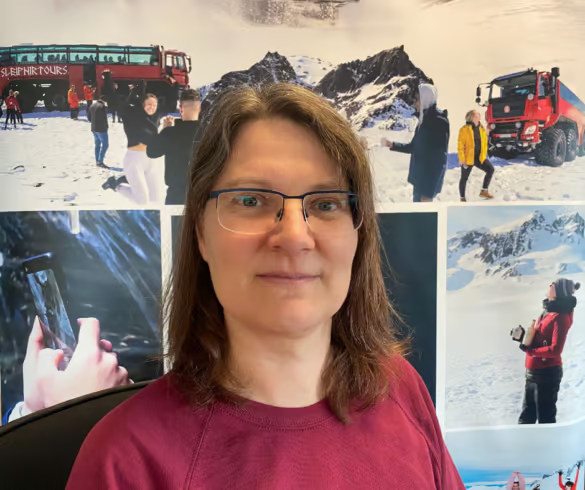
Silke Freudenberger leads you to the white wilderness of Langjokull glacier
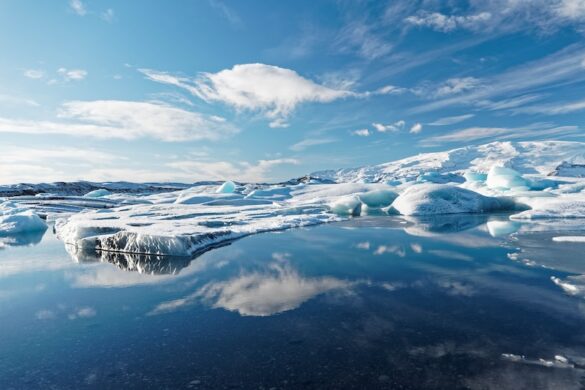
Jokulsarlon Glacial Lagoon is ground zero for climate change
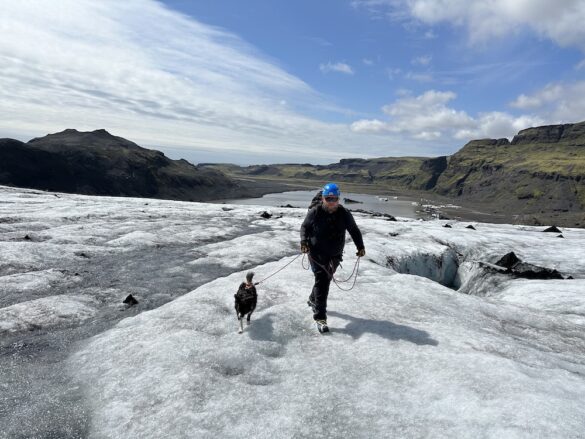
The Icelandic Private Guide that Creates Your Best Days
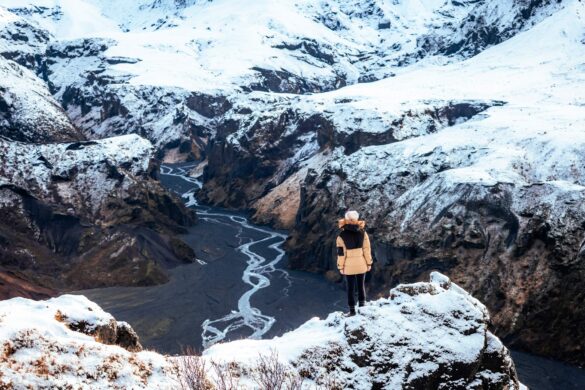
Unforgettable Journeys with Glaciers and Waterfalls in Iceland
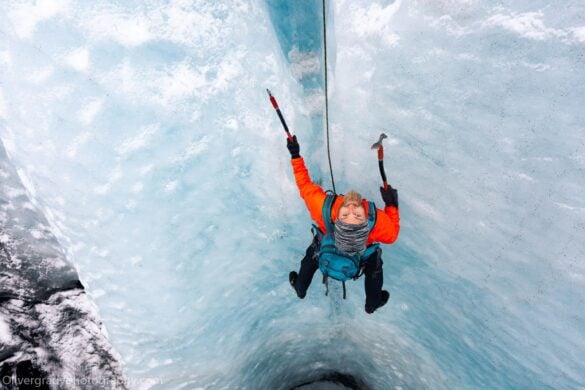
Iceland Glacier Hikes With Simon Rees: Experience Magic on Ice
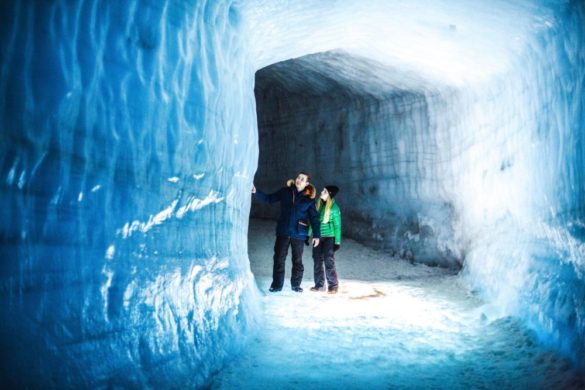
The amazing Into the Glacier and snowmobiling day tour
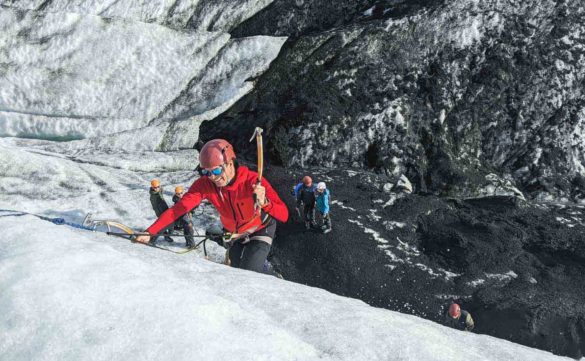
Ice Climbing in Iceland will take you right out of your comfort zone!