

The Ring Road, Route 1, is the one road that goes all the way around Iceland. It is 1,322 km long, paved the whole way, mostly one lane in each direction, and it passes most of what people come here to see: the waterfalls of the South Coast, the glacier lagoons, the East Fjords, Lake Mývatn and Akureyri in the north.
I’ve lived here all my life and I have driven it more times than I can count. Below is the plan I give my friends: an interactive map of the whole route, a relaxed 10-day itinerary, and the practical things that make the difference, like where to sleep, where the fuel stops are thin, and when to leave the car and just look.
My one rule: you are on holiday. Sleep in. Drive two to four hours a day, not eight. You will see more that way, not less.
Join 8,000 Iceland Travel Fans & Unlock Exclusive Discounts
Get Iceland advice straight from a local. Subscribe and unlock exclusive discounts from 50+ hand-picked Icelandic operators.
- ✔ Instant access to exclusive discount codes
- ✔ Savings on tours, car, and camper rentals
- ✔ Tips and inspiration for planning your Iceland trip

One of the most popular road trips in the world is the Ring Road in Iceland. Its popularity is no coincidence. In a short time, you can see some of the most incredible scenery and get to know one of the most beautiful countries on the planet.
Updated September 2026 · By Jón Heiðar Ragnheiðarson, Reykjavík
The Ring Road at a glance
- Length: 1,322 km (821 miles), paved all the way around.
- Driving time without stops: about 16 to 17 hours.
- Days you need: 10 for a relaxed trip. Seven is possible but rushed. Fourteen lets you add Snæfellsnes or the Westfjords.
- Best time: June to early September. May and late September are quieter. October to April is a winter trip, and a different kind of trip.
- Car: any rental car in summer. A 4×4 with winter tyres from October to April.
- Direction: I go counterclockwise, South Coast first. Either way works.
Iceland Ring Road map
Tap any pin to see what’s there and read my article about it. Use the day buttons to zoom in on one day of the plan. The blue line is the Ring Road, the dashed orange line is the Golden Circle on day 2, and the green pins are detours worth making if you have the time.
Want this plan fitted to your own dates? Ask Nonni, the Stuck in Iceland travel assistant. He knows every article on this site and checks the live weather, road conditions and what’s on while you travel.
A relaxed 10-day Ring Road itinerary
This goes counterclockwise from Reykjavík. The distances are rough and don’t count detours. Each day has a link that opens the route in Google Maps, which is handy on your phone in the car.
Day 1: Arrive and settle into Reykjavík
Most flights from North America land early in the morning. Don’t pick up a rental car and set off around Iceland after a night in an economy seat. Take the airport bus into town, drop your bags, and walk. Laugavegur, Hallgrímskirkja and the old harbour are all close together. Go for a swim in a neighbourhood pool, eat well and go to bed early. Collect the car tomorrow morning; most rental companies have an office in Reykjavík as well.
If you still have energy, see real lava poured indoors at the Lava Show (full disclosure: my day job is sales and marketing manager there), or drive under an hour to Hvammsvík Hot Springs by the sea. Both have reader discounts in my newsletter.
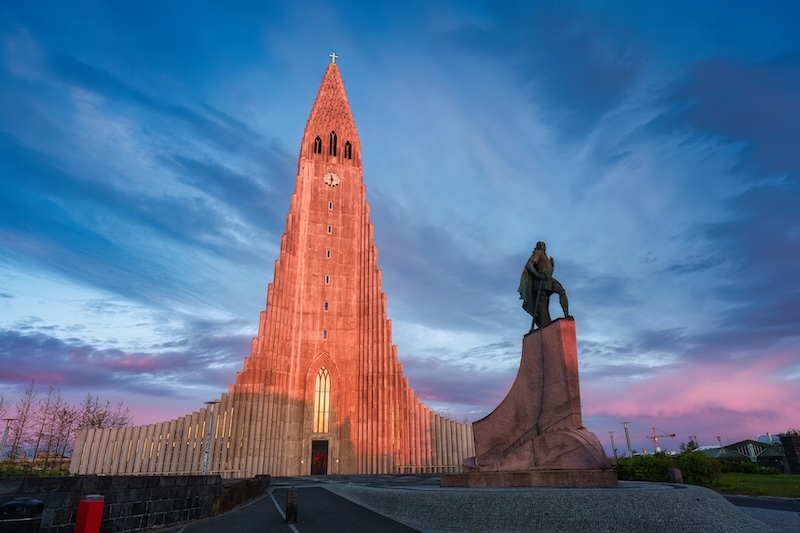
Sleep: Reykjavík. More in my arrival guide and Reykjavík guide.
Show day 1 on the mapOpen day 1 in Google Maps
Day 2: The Golden Circle
The Golden Circle is a detour off the Ring Road, and it’s worth it. Walk the rift at Þingvellir, where the old parliament met from the year 930. Watch Strokkur go off at Geysir; it erupts every few minutes. Then Gullfoss, the two-step waterfall on the Hvítá river.
End the day in warm water. The Secret Lagoon in Flúðir is Iceland’s oldest swimming pool, a natural hot spring with steam coming off the ground around it. Laugarás Lagoon, which opened in 2025, is the new one on the circle. For lunch, the tomato greenhouse at Friðheimar is popular, so book ahead.
The tour buses arrive at Þingvellir mid-morning. Late afternoon at Gullfoss is quieter. My full Golden Circle itinerary has the details.
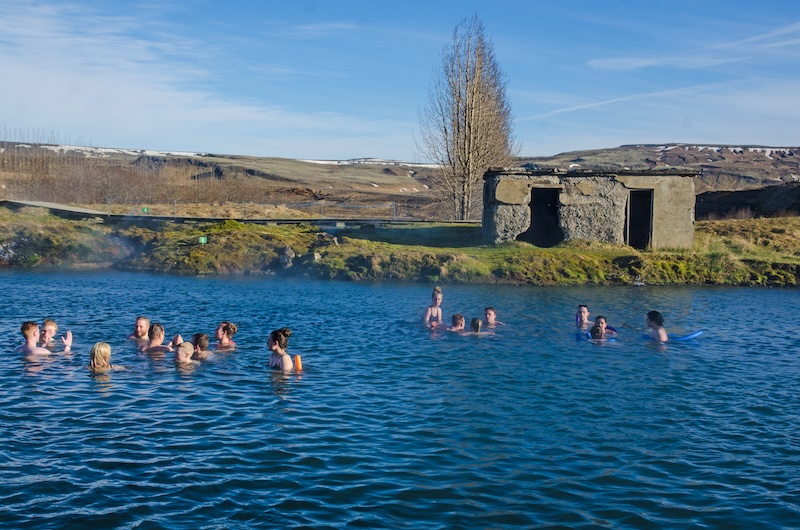
Sleep: Hella or Hvolsvöllur, close to the South Coast.
Show day 2 on the mapOpen day 2 in Google Maps
Day 3: Waterfalls and black sand
A short driving day on purpose. The South Coast is packed with stops and you’ll want time at each one.
- Seljalandsfoss and Gljúfrabúi: walk behind the first, then squeeze into the gorge to see the second, just next door. Bring a rain jacket.
- Skógafoss: climb the steps on the right for the view, and walk a little way up the river path if you have legs for it.
- Dyrhólaey: cliffs, a sea arch and puffins in early summer.
- Reynisfjara: black sand, basalt columns and the Reynisdrangar sea stacks.
Take this seriously: the waves at Reynisfjara come without warning, run far up the beach and have killed visitors. Stay well back from the water, never turn your back on the sea, and keep children close.
In Vík there is a second Lava Show, and the village makes a good, quiet base. My South Coast road plan has more stops if you want them.

Sleep: Vík.
Show day 3 on the mapOpen day 3 in Google Maps
Day 4: Lava fields, a canyon and the glacier
East of Vík the road crosses Eldhraun, a huge lava field covered in thick moss. Admire it from the paths; the moss takes decades to grow back where people walk on it. Take the short detour to Fjaðrárgljúfur canyon and walk the path along the rim.
Fill up with fuel and groceries in Kirkjubæjarklaustur, as there is little else until Skaftafell. After that the road crosses the flat black sands under Vatnajökull, with the mountain Lómagnúpur standing on its own.
At Skaftafell, walk up to Svartifoss, the waterfall framed by basalt columns. It’s about an hour and a half there and back. If you want to stand on a glacier, go with a certified guide and never on your own. Local Guide of Vatnajökull, a family company, gives my readers 10% off with the code STUCK.

Sleep: Skaftafell or nearby. There aren’t many places to stay here, so book early.
Show day 4 on the mapOpen day 4 in Google Maps
Day 5: The glacier lagoons
Stop first at Fjallsárlón, the smaller and quieter glacier lagoon. Then Jökulsárlón, where icebergs break off the glacier and drift out to sea. Across the road is Diamond Beach, where chunks of ice wash up on black sand. In summer there are boat tours among the icebergs. From October to March, ice caves open, and those you visit with a guide only.
End the day in Höfn, a working fishing town. It’s known for langoustine, so book a table for dinner.

Sleep: Höfn.
Show day 5 on the mapOpen day 5 in Google Maps
Day 6: The East Fjords
The longest drive so far, but the fjord road is the point of the day. The Ring Road winds in and out of one fjord after another, through small fishing villages where hardly anyone stops. Look for the 34 granite eggs on the pier in Djúpivogur, the stone collection a local woman named Petra gathered over her lifetime in Stöðvarfjörður, and the French history of Fáskrúðsfjörður.
Watch your GPS: it may send you over Öxi, road 939, as a shortcut. It is a steep gravel mountain pass. In summer and good weather it’s fine; in bad weather, and all winter, stay on the Ring Road along the coast.
In the evening, soak at Vök Baths, the pools floating on a lake near Egilsstaðir (reader discount in my newsletter). With a spare hour, drive out to Hengifoss, a tall waterfall with red clay layers and a food truck selling sheep milk ice cream. More ideas in my East Iceland guide.
Sleep: Egilsstaðir.
Show day 6 on the mapOpen day 6 in Google Maps
Day 7: Stuðlagil canyon and the highland plateau
Turn off onto road 923 for Stuðlagil, a canyon lined with basalt columns about 20 minutes from the Ring Road. The easy viewing platform is on the west side; the east side takes a longer walk but brings you down to the river. The water is turquoise in early and mid-summer. When the reservoir upstream overflows, usually in late summer, it turns brown.
After that the Ring Road climbs onto Möðrudalsöræfi, a high, empty plateau. There are almost no services for a long stretch, so fill the tank in Egilsstaðir. The farm café at Möðrudalur is the one stop.
If you have the energy, take the paved road 862 north to Dettifoss, often called Europe’s most powerful waterfall. It adds an hour or two.
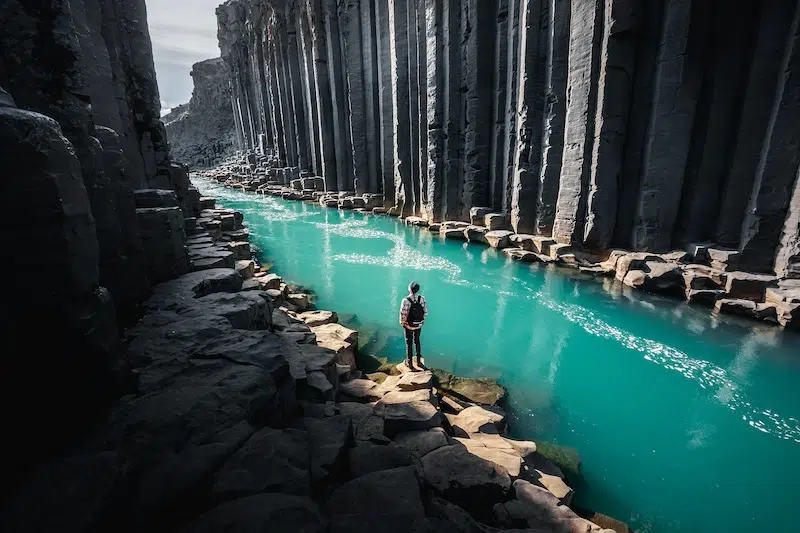
Sleep: Mývatn, for two nights.
Show day 7 on the mapOpen day 7 in Google Maps
Day 8: A day off from driving at Mývatn
No long drive today. Loop the lake: the steaming mud pots at Hverir, the lava pillars of Dimmuborgir, the walk up the Hverfjall crater, and the pseudo-craters at Skútustaðir. Stay on the paths around the hot ground. In the evening, soak at Earth Lagoon Mývatn. My article on the quiet pathway at Mývatn shows a side of the lake most people miss.
Or drive to Húsavík for whale watching with North Sailing and a soak at the GeoSea sea baths on the cliff above the bay. Both have reader discounts in my newsletter. My Diamond Circle itinerary covers the area in more depth.

Sleep: Mývatn.
Show day 8 on the mapOpen day 8 in Google Maps
Day 9: Goðafoss and Akureyri
Stop at Goðafoss, the waterfall of the gods, right by the road; walk both sides. Then carry on to Akureyri, the capital of the north and one of my favourite towns in Iceland. Soak at the Forest Lagoon across the fjord, get ice cream at Brynja, walk up to the church and through the botanical garden. My top eight things to do in Akureyri has the rest, and here is where to get a good coffee.
The tunnel just east of Akureyri has a toll that you pay online. Ask your rental company how they handle it.
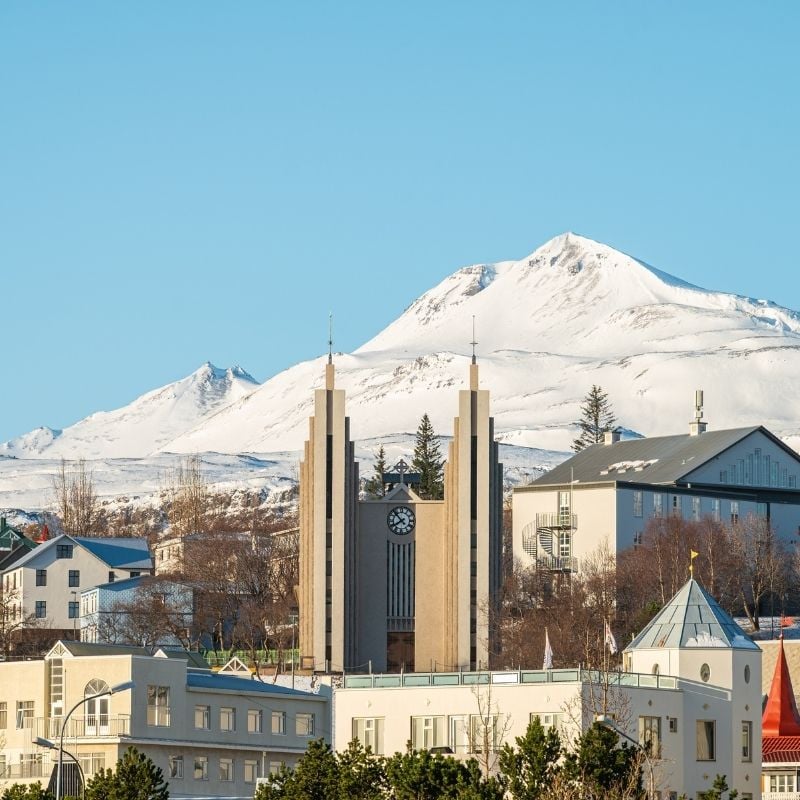
Sleep: Akureyri.
Show day 9 on the mapOpen day 9 in Google Maps
Day 10: Back to Reykjavík
I’ll be honest: this is the one long day. Break it up. Stop at the turf farm at Glaumbær in Skagafjörður, horse country. If it’s September, a réttir sheep round-up may be on nearby. Make a detour to Hvammstangi for seal watching, or stop at the Settlement Centre in Borgarnes.
Better still, make it an 11-day trip. Sleep in Borgarnes or Húsafell and spend the morning at the Hraunfossar waterfalls and Krauma baths. Whatever you do, don’t fly out the same day you drive down from the north. In winter the mountain passes on this stretch can close.
Sleep: Reykjavík, or Borgarnes if you take the extra day.
Show day 10 on the mapOpen day 10 in Google Maps
Only have seven days?
You can drive the Ring Road in seven days, but you’ll spend most of every day in the car. If you must:
- Skip the first Reykjavík day and see the city at the end instead.
- Drive from Vík to Höfn in one day, combining days 4 and 5.
- Drop the day off at Mývatn.
My honest advice for a week: do half the island well. Take the Golden Circle and the South Coast as far as Jökulsárlón, then come back. My South Coast road plan is built for exactly that.
Two weeks? Add these
- Snæfellsnes peninsula (2 days): a glacier volcano, fishing villages and the mountain Kirkjufell. See a day on Snæfellsnes.
- The Westfjords (4 days or more): long fjords, few people and the Dynjandi waterfall. See ten places to see in the Westfjords and my Westfjords road trip.
- The Diamond Circle (1 to 2 days): Dettifoss, the Ásbyrgi canyon and Húsavík, done properly. See my Diamond Circle itinerary.
- West Iceland (1 day): Hraunfossar, Krauma and Húsafell on the way back to Reykjavík.
Clockwise or counterclockwise?
Both work. I send people counterclockwise, South Coast first, for two reasons. The South Coast is what most people most want to see, so you see it while you’re fresh. And if the weather turns later in the trip and you lose a day in the north, you haven’t missed the big sights. In winter, the south is also where the weather is usually kinder.
Car or camper? Reader discounts that anyone can use
A car with guesthouses is the comfortable choice, and in spring, autumn and winter it’s the only sensible one. A camper van saves on accommodation in summer, but you must sleep at campsites; wild camping in a camper is not allowed. These discounts are open to everyone. Book through the link to get the saving:
| Company | Discount | How to get it |
|---|---|---|
| Go Car Rental (cars) | 5% off | Applies automatically when you book through this link |
| Lava Car Rental (cars) | 5% off | Code CREATOR, already added when you use this link |
| Europcar Iceland (Höldur) (cars, SUVs, electric) | 10% off | Code STUCK10 at holdurcarrental.is |
| Go Campers (camper vans) | 5% off | Applies automatically when you book through this link |
| Happy Campers (camper vans) | 5% off | Code STUCK5 via this link |
| Iceland Cover (outdoor gear rental) | 10% off | Code Stuck via this link |
Konvin cars and campers give my newsletter subscribers 10% off. The code comes free with the Stuck in Iceland newsletter, along with codes for glacier tours, whale watching, hot springs and more.
Before you book, read my notes on the mistakes people make renting a car and renting a camper van. Insurance terms differ between companies and change, so read them carefully and ask the company directly if anything is unclear.
Hot springs along the Ring Road
There is warm water all the way around, and a soak at the end of a driving day does wonders:
- Day 1: Hvammsvík Hot Springs, by the sea in Hvalfjörður.
- Day 2: the Secret Lagoon or Laugarás Lagoon on the Golden Circle.
- Day 6: Vök Baths near Egilsstaðir.
- Day 8: Earth Lagoon Mývatn, or GeoSea in Húsavík.
- Day 9: the Forest Lagoon in Akureyri.
- Day 10 or 11: Krauma in West Iceland.
Several of them give my newsletter readers a discount. For every pool in the country, see my complete hot spring guide.
Driving the Ring Road: what I tell my friends
- Speed limits: 90 km/h on paved roads, 80 on gravel, and 50 or lower in towns. There are speed cameras, and the fines are steep.
- Never stop on the road for a photo, however good the view. Use the pull-outs and car parks.
- Single-lane bridges are marked Einbreið brú. Slow down; whoever reaches the bridge first goes first.
- Sheep wander onto the road in summer, especially in the north and east.
- Wind: gusts can tear a car door off its hinges. Park facing into the wind and hold the door with both hands. It is one of the most common rental damages in Iceland.
- Fuel: fill up when you’re down to half a tank. The gaps are longest on the plateau between Egilsstaðir and Mývatn and in the south-east. Electric cars are fine too, as there are chargers all the way around, but plan your stops.
- Every morning, check umferdin.is for road conditions, vedur.is for the weather and safetravel.is for alerts. In an emergency, call 112.
- F-roads are mountain roads, not part of the Ring Road. They’re for 4x4s only, open roughly from late June to September, and rental insurance usually does not cover river crossings.
More in my safety tips and my list of the apps worth having on your phone.
The Ring Road in winter
From October to April the Ring Road is a different trip. In December you get four to five hours of daylight. Storms can close the mountain passes in the north and east for a day or more; Holtavörðuheiði, Öxnadalsheiði and Möðrudalsöræfi are the usual ones. If you go:
- Rent a 4×4 with proper winter tyres.
- Build in one or two spare days, and don’t book non-refundable nights back to back.
- Check umferdin.is every morning, and be ready to stay put.
- Drive only in daylight, and don’t plan more than three hours of driving a day.
Many winter visitors are better off staying in the south: the Golden Circle and South Coast as far as Jökulsárlón, with ice caves and northern lights thrown in. See Iceland in winter.
Get the subscriber-only discounts before you book. My free newsletter comes once a week: honest planning tips, interviews with locals, and discount codes from more than 50 Icelandic companies for tours, rentals and hot springs. Unsubscribe any time.
Ring Road FAQ
How long is the Iceland Ring Road?
The Ring Road, Route 1, is 1,322 km (821 miles) long. Without stops it takes about 16 to 17 hours of driving.
How many days do I need for the Ring Road?
Ten days for a relaxed trip. It can be done in seven, but you’ll spend most of each day driving. With 14 days you can add Snæfellsnes, the Westfjords or the Diamond Circle.
Is the whole Ring Road paved?
Yes, the whole of Route 1 is paved. Some of the side roads to sights are gravel, so drive them slowly.
Do I need a 4×4 to drive the Ring Road?
Not in summer; any rental car will do from May to September. From October to April I recommend a 4×4 with winter tyres, especially in the north and east. F-roads in the highlands require a 4×4 by law.
Is it safe to drive the Ring Road in winter?
It can be, if you’re prepared. Expect short days, fast-changing weather and roads that close in storms. Rent a 4×4 with winter tyres, check umferdin.is and vedur.is every morning, keep spare days in your plan, and carry water, snacks and warm layers.
Should I drive the Ring Road clockwise or counterclockwise?
Both work. I suggest counterclockwise, South Coast first, so you see the biggest sights while you’re fresh, and a bad-weather day later in the north costs you less.
How much does a Ring Road trip cost?
The biggest costs are the car or camper, accommodation and fuel, and all three are highest in summer. Save by buying groceries at Bónus or Krónan instead of eating out for every meal, and by using reader discounts on rentals and tours. See my Iceland on a budget guide.
Can I camp along the Ring Road?
Yes, at campsites. Wild camping is not allowed for camper vans and is restricted almost everywhere else. There are campsites all around the Ring Road, and most open from May to September.
Do I need GPS or mobile data?
It helps. Google Maps and Apple Maps work well with data. Download the offline map of Iceland before you set off, as coverage can drop in the East Fjords and on the highland plateau.
When is the best time to drive the Ring Road?
June to early September, for long days, open roads and open campsites. May and late September are quieter and still usually easy driving, and in September the northern lights return. October to April is for experienced winter drivers.
Can I stop anywhere to take photos?
No. Never stop on the road itself. Use pull-outs and car parks, and respect private land and the moss.
Before you go
- How to stay safe in Iceland
- How to dress for Iceland
- How to pay for things in Iceland
- The apps worth having on your phone
- Landing at Keflavík: an Icelander’s arrival guide
Written by Jón Heiðar Ragnheiðarson, editor of Stuck in Iceland. I was born in Akureyri and have written about travel in Iceland since 2012. If something in this guide has changed on the road, let me know, and I’ll fix it.